
The Northwest Passage's Icy Grip: Unraveling the Doomed Fate of the Franklin Expedition
November 05, 2026 — ny_wk

▶ The Northwest Passage's Icy Grip: Unraveling the Doomed Fate of the Franklin Expedition | Subscribe to @untoldstorysaga
Disclosure: some links above are affiliate links — if you buy through them I may earn a small commission at no extra cost to you. Thanks for supporting the channel!
The Franklin Expedition mystery is one of history's most enduring and chilling tales of Arctic disaster, unraveling over a century of desperate searches and revealing the tragic fate of 129 men swallowed by the ice. This article explores the expedition's hubris, the frantic quest for answers, and the recent discoveries that finally bring closure to the frozen enigma.
Imagine the scene: summer of 1845. Two magnificent ships, HMS Erebus and HMS Terror, stand poised, their masts reaching for the sky. Onboard, 129 men, Britain's finest, full of swagger and purpose, ready to conquer the last unmapped stretches of the Arctic. Their mission? To chart the Northwest Passage, that elusive sea route through the top of the world. They were heroes before they even left, destined for glory. But glory would never come. Instead, they sailed into a void, swallowed whole by the very ice they sought to master. Their disappearance ignited one of the greatest **Franklin Expedition mystery** sagas ever known, a chilling true-crime narrative played out on the world's most desolate stage.
The Unsinkable Fleet: Setting Sail for Glory
The year is 1845. Victorian Britain is at the zenith of its power, its naval might unchallenged, its industrial prowess transforming the world. Exploration was an extension of this empire-building, a grand pursuit of knowledge and dominion. And the biggest prize left? The Northwest Passage. For centuries, explorers had dreamed of a navigable route connecting the Atlantic to the Pacific, a shortcut that promised immense commercial and strategic advantages. It was an obsession.
Enter Sir John Franklin. At 59, he was a seasoned Arctic explorer, a veteran of previous expeditions, some successful, others fraught with peril. He'd even earned the nickname "the man who ate his boots" after a particularly desperate overland journey. Despite his age and a perhaps questionable track record for consistent good fortune, he was chosen to lead what was to be the ultimate Arctic expedition. This was to be his final, triumphant command, cementing his legacy.
His ships were masterpieces of naval engineering for their time: HMS Erebus and HMS Terror. These weren't just wooden sailing vessels. They were purpose-built, fortified for battle with the ice. Their bows were sheathed in thick iron plating. Their hulls, reinforced with massive oak timbers, could withstand immense pressure. And here's the kicker: both ships were fitted with screw propellers, driven by locomotive steam engines, adapted from a railway company. These engines, powerful enough to propel the ships at a modest four knots in calm water, were designed to chew through light ice, a cutting-edge advantage that promised to make them unstoppable. They even had heating systems, an onboard library of 1,200 books, and enough tinned food for three years. Three years! It seemed impossible for them to fail.
The crew of 129 men were carefully selected, highly trained, and brimming with the confidence of their age. They were provisioned for a truly epic voyage, carrying not just essential supplies but an array of luxuries – fine china, silver cutlery, musical instruments, even huge quantities of chocolate and lemon juice (a known anti-scurvy agent). Every detail seemed accounted for, every contingency planned. This was not a fool's errand. This was a statement of imperial ambition, a meticulously prepared assault on the Arctic's final frontier. They were ready. They were confident. They were, in hindsight, perhaps dangerously overconfident.
Their last confirmed sighting by European eyes was in July 1845, by whaling ships in Baffin Bay. The Erebus and Terror, magnificent and proud, were sailing east towards Lancaster Sound, the gateway to the passage. The whalers exchanged pleasantries, some letters. They waved goodbye. And then, the ships, and all 129 souls aboard, simply vanished. The Arctic had opened its maw and swallowed them whole. The world would not hear from them again for many, many years. A silence descended, a profound, chilling quiet that would haunt a nation for generations, fueling the very core of the **Franklin Expedition mystery**.
The Silence Descends: A Nation Holds Its Breath
Initially, there was no panic. Arctic expeditions were lengthy, arduous affairs. Delays were common. Months could pass, even a year or two, without communication. It was the nature of the beast. But as 1847 bled into 1848, an uneasy ripple began to spread across Britain. Two winters. No word. The vast provisions, the advanced ships, the experienced commander – surely something should have been heard?
The true engine behind the escalating concern was Lady Jane Franklin. A woman of formidable intellect, unshakeable determination, and immense influence, she refused to let her husband's fate be forgotten. While the Admiralty, perhaps burdened by bureaucracy and a touch of professional pride, moved slowly, Lady Jane moved mountains. She lobbied Parliament, appealed to foreign dignitaries, wrote countless letters to newspapers, and used her considerable personal fortune to fund private search expeditions. She was relentless, a force of nature against the crushing indifference of the ice.
The public became captivated. The disappearance of an entire expedition, one so well-equipped and led by a national hero, was a gripping, terrifying enigma. Soon, a desperate race began. The Admiralty, spurred by Lady Jane and public pressure, launched multiple search parties by both land and sea. In total, over a decade, some 39 government and privately funded expeditions would set out. It became the largest search and rescue effort in history, a monumental a sign of British determination, and a growing acknowledgment of the scale of the unfolding tragedy. Other explorers, like Dr. John Rae and Captain Francis Leopold McClintock, would play crucial roles, though their efforts were often met with resistance and skepticism back home, particularly when their findings pointed to an unpalatable truth.
The irony is cruel. While search ships crisscrossed the known Arctic, often getting trapped in the very ice that claimed Franklin, the lure of the Passage remained. Some searchers themselves, finding open water, couldn't resist the temptation to push further west, almost forgetting their primary mission for a fleeting moment of glory. But the Arctic rarely allows such detours without consequence. The more they searched, the more the silence mocked them. The **Franklin Expedition mystery** was not just about what happened, but about why no trace could be found. It was a blank slate, absorbing every effort, revealing nothing.
Whispers from the Ice: Early Discoveries and Grim Clues
For years, the search yielded little more than scattered rumors and tantalizing, frustratingly vague clues. Then, in 1854, a breakthrough, albeit a deeply unsettling one. Dr. John Rae, a Hudson's Bay Company physician and explorer renowned for his Arctic survival skills and respect for Inuit culture, made contact with local Inuit near Pelly Bay. They told him a chilling story. Years earlier, they had encountered a group of European men, thin and starving, dragging a boat southwards across King William Island. Later, they found evidence of about 30 bodies near Castor and Pollux River, some mutilated. The implication was stark, horrifying: cannibalism. Rae, understanding the grim reality of Arctic survival, immediately relayed this information back to Britain.
The British public was outraged. The notion that brave British sailors could descend to such a barbaric act was unthinkable, scandalous. Charles Dickens himself, along with others, attacked Rae, questioning his credibility and the reliability of "savage" testimony. It was a stark reminder of the cultural biases of the time, and a tragic dismissal of the very people who held the keys to the **Franklin Expedition mystery**.
Despite the official pushback, Lady Jane Franklin refused to give up. She funded one last major expedition, led by Captain Leopold McClintock aboard the Fox in 1859. McClintock's findings would finally provide concrete answers, chilling and irrefutable. His team found the first physical evidence of the expedition's demise: a cairn on King William Island, near what is now known as Victory Point. Inside, a copper cylinder contained two notes. The first, dated May 28, 1847, stated that the Erebus and Terror had wintered at Beechey Island in 1845-46, then became beset in the ice on September 12, 1846. All was "well." Sir John Franklin was still in command.
But then, written in the margin, dated April 25, 1848, was a second, terrifying update. This note revealed the true horror. It stated that Sir John Franklin had died on June 11, 1847. More devastatingly, it declared that the ships, Erebus and Terror, had been abandoned on April 22, 1848, after 19 months locked in the ice. The 105 surviving officers and men (24 men had already died) were attempting to march south towards the Back's Fish River. This was the smoking gun. This was the moment the **Franklin Expedition mystery** began to shift from a pure disappearance to a story of desperate, doomed survival.
McClintock's team also discovered other grim artifacts: a skeletal foot encased in a boot, a tattered uniform, and scattered remains. They confirmed Rae's reports of bodies found on the island. Combined with earlier findings from other searchers – the graves of three sailors on Beechey Island (John Torrington, John Hartnell, and William Braine), their bodies remarkably preserved in the permafrost, revealing deaths from pneumonia and tuberculosis – a grim picture began to emerge. The well-equipped expedition had fallen victim to the relentless Arctic. The ships became trapped, the men tried to walk out, and one by one, they succumbed to scurvy, starvation, hypothermia, and eventually, desperation so profound it led to cannibalism.
Decades of Desperation: Unraveling the Franklin Expedition Mystery
The McClintock discoveries confirmed the broad strokes of the expedition's fate, yet the specifics remained shrouded in agonizing uncertainty. The ships themselves were still missing. What happened in those final, desperate days and weeks? What led such a seemingly robust expedition to such a catastrophic end?
The Inuit testimony, so scorned by many in Britain, continued to be a critical, often overlooked, source of information. Their ancestors had witnessed the expedition's slow demise, seen the ships, interacted with the starving men. They spoke of ships being crushed, of men falling ill, of bodies scattered across the land. It would take generations for European explorers and researchers to truly appreciate the invaluable precision of this oral history. Had they listened earlier, much suffering and expense could have been spared, and the core of the **Franklin Expedition mystery** might have been cracked decades sooner.
As the decades turned into centuries, scientific advancements offered new avenues for investigation. Forensic studies on the remains recovered from King William Island and Beechey Island began to paint a more nuanced, and horrifying, picture. Analyses of bone and hair samples revealed astonishingly high levels of lead. This discovery gave rise to one of the most compelling theories behind the expedition's failure: lead poisoning. The tinned provisions, hailed as a technological marvel, were found to have been poorly manufactured, with seams sealed using a high-lead solder. Imagine: 8,000 pounds of tinned beef, 2,000 pounds of vegetable soup, all slowly poisoning the crew.
Lead poisoning would have been debilitating. It causes severe abdominal pain, fatigue, anemia, and perhaps most devastatingly for men trying to survive in the Arctic, neurological damage leading to confusion, irrational behavior, depression, and even psychosis. Imagine the effect this would have had on the decision-making of the officers, on the morale and physical capabilities of the crew. It wasn't just scurvy or starvation; it was a slow, agonizing descent into madness, compounded by the brutal environment. The Arctic wasn't just taking their lives; it was destroying their minds first. This theory added a profound layer of medical tragedy to the existing narrative of exposure and starvation, offering a stark explanation for why such experienced men might have made fatal errors.
Despite the accumulating evidence, the desire to find the ships, to stand on the deck where Franklin once stood, never faded. People continued to search, to speculate, to argue over theories. The **Franklin Expedition mystery** had become more than just a historical event; it was a cultural touchstone, a warning against hubris, a sign of the unforgiving power of nature, and a deeply human story of ambition, suffering, and loss. The questions persisted: Where exactly did the ships go down? What were the final moments like? Could anything have been done differently? The frozen north held its secrets tight.
The Deep Freeze Thaws: Modern Archaeology and Final Answers
For over 160 years, the exact locations of HMS Erebus and HMS Terror remained the Arctic's most tantalizing secret. But the turn of the 21st century brought new technologies, new resolve, and a renewed, collaborative spirit that finally broke the ice. Parks Canada, a national agency responsible for heritage sites, spearheaded a multi-year, multi-partner search effort. This wasn't just about advanced sonar and remotely operated vehicles (ROVs); crucially, it was about finally, truly listening to the Inuit.
Inuit elders and hunters, descendants of those who had witnessed Franklin's demise, shared their ancestral knowledge, their oral histories, with researchers. They spoke of specific bays, of fragments of ships seen near certain islands. One particular story, passed down through generations by Inuit elder Louie Kamookak, spoke of a ship sinking in an area known as Utjulik, or "where there is food," in Terror Bay. This wasn't just folklore; it was precise, verifiable intelligence, waiting patiently for the right people to hear it.
Then, in 2014, the world gasped. After years of dedicated searching, Parks Canada announced the discovery of **HMS Erebus**. Located relatively shallow, off King William Island, she was remarkably preserved. The images were breathtaking: a ghostly hull rising from the seabed, masts broken but still discernible, deck fittings eerie in their familiarity. It was the discovery that solidified the narrative, giving a physical presence to the long-lost expedition. The **Franklin Expedition mystery** suddenly felt very real, very tangible.
Just two years later, in September 2016, another incredible announcement followed: **HMS Terror was found!** This discovery was even more astonishing, in part due to a direct tip from Sammy Kogvik, an Inuit ranger and hunter. He recounted seeing a mast sticking out of the ice many years prior in Terror Bay – precisely the location hinted at by Louie Kamookak's ancestors. The Terror was found deeper than the Erebus, in an almost pristine state, a veritable time capsule under the sea. Her windows were intact, her bell still present, plates stacked neatly on shelves, even the captain's bed still made. It was as if the crew had simply stepped away for a moment, waiting to return.
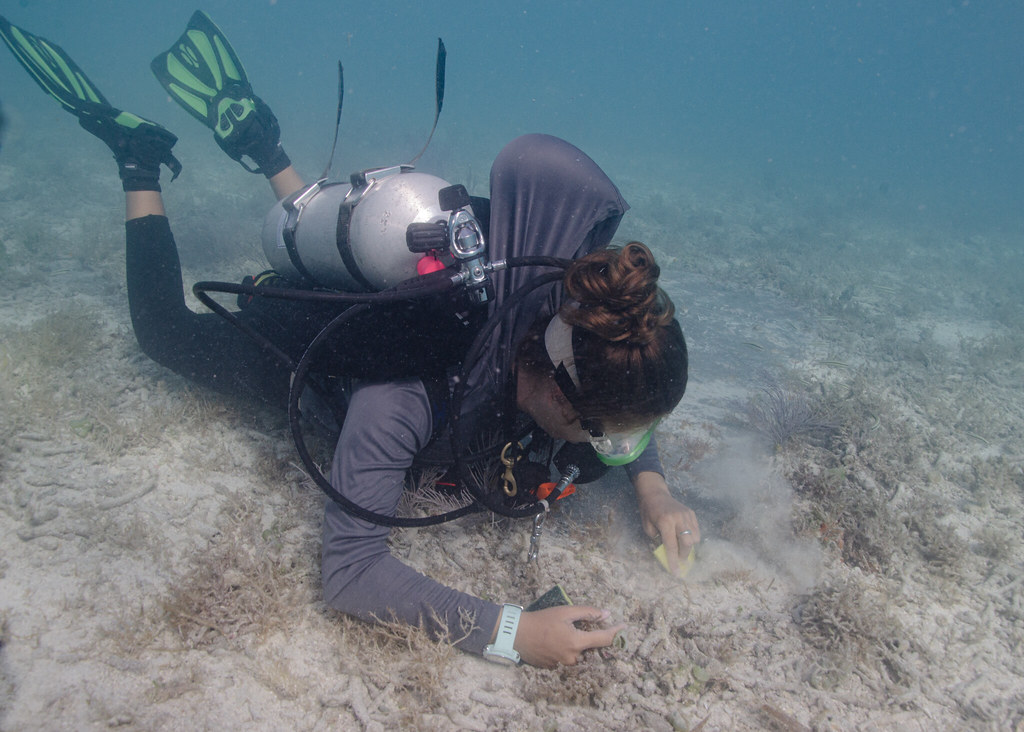
These underwater discoveries have transformed our understanding. Underwater archaeology has allowed researchers to explore these wrecks with unprecedented detail. Artifacts brought to the surface include dinner plates emblazoned with the Franklin crest, tools, navigational instruments, uniform buttons, and even fragments of textiles. Each item tells a story, offering heartbreaking glimpses into the daily lives and final moments of the crew. They confirm the ships were abandoned in an orderly fashion, suggesting a desperate but organized retreat. The preservation of the wrecks also tells us that they likely did not suffer a catastrophic "crushing" event by the ice immediately, but were abandoned, drifted, and then sank sequentially, perhaps as the ice retreated and refroze, opening seams or weakening their already battered structures.
The findings have largely corroborated the Inuit accounts and the McClintock record. The ships were trapped, the men abandoned them, and then perished during their desperate march. The theories of lead poisoning, scurvy, and hypothermia are reinforced by the context provided by these chilling underwater ghosts. The Arctic finally, slowly, yielded its grip, giving us the answers we sought, though the weight of the human tragedy remains immense. The **Franklin Expedition mystery** isn't completely solved – the individual fates of all 129 men may never be fully known – but the core questions have been answered. We know where the ships lie. We know how they ended.

Echoes from the Arctic: What We've Learned and What Remains
The **Franklin Expedition mystery** has captivated me, and countless others, for decades. It's a story that transcends mere historical fact; it's a profound human drama, played out against the most unforgiving backdrop imaginable. What have we truly learned from this epic, tragic saga?
First, the sheer, indifferent power of the Arctic. Victorian hubris, fuelled by technological advancements and imperial might, simply could not stand against the relentless, crushing force of the ice and the brutal extremes of the climate. No amount of iron plating or steam engines could overcome the long, dark winters and the ever-shifting, lethal grip of the polar sea. It reminds us that nature, ultimately, holds the cards.
Second, the invaluable, often dismissed, wisdom of Indigenous peoples. The Inuit were the original experts of the Arctic. Their knowledge, passed down through generations, held the keys to the expedition's fate all along. It’s a powerful lesson in humility and respect for local knowledge systems. Had European explorers truly listened from the outset, the answers might have come much sooner, and the search efforts might have been far more efficient.
Third, the enduring human spirit. Lady Jane Franklin's unwavering dedication, spanning decades, is a sign of love and perseverance. The countless searchers who braved unimaginable dangers, often at great personal risk, demonstrate a collective determination to solve the mystery. And the men of the Franklin Expedition themselves, in their final, desperate march, displayed a profound will to survive against impossible odds, even if it ultimately failed.
The ships, HMS Erebus and HMS Terror, now lie protected as archaeological sites, collaborative ventures between Parks Canada and the Inuit. They are more than just wrecks; they are solemn graves, poignant memorials to the 129 souls lost. They are a stark reminder of human ambition, vulnerability, and the eternal, chilling allure of the unknown. While the broad strokes of the **Franklin Expedition mystery** are now clear, the individual stories of those men, their hopes, their fears, their final thoughts, remain largely unwritten, whispered only by the Arctic winds and the silent depths. And perhaps, that's how some mysteries are meant to remain – forever haunting, forever captivating, forever untold by human voice, save for the stories we imagine.
Key Takeaways
- The Franklin Expedition, comprising HMS Erebus and Terror and 129 men, vanished in 1845 while attempting to complete the Northwest Passage.
- Initial search efforts, largely driven by Lady Jane Franklin, led to early discoveries like graves on Beechey Island and the crucial Victory Point Record in 1859, revealing Franklin's death and the abandonment of the ships.
- Inuit testimony, often overlooked, proved vital, providing early insights into the expedition's demise and even hints at the ships' locations, information later corroborated by modern archaeology.
- Forensic analysis of remains revealed likely causes of death including scurvy, starvation, hypothermia, and severe lead poisoning from improperly sealed food cans, contributing to mental and physical debilitation.
- The 2014 discovery of HMS Erebus and the 2016 discovery of HMS Terror, both remarkably preserved, finally offered concrete answers to the ships' fates, solidifying the narrative of a desperate abandonment and tragic end.
Frequently Asked Questions
What was the primary goal of the Franklin Expedition?
The Franklin Expedition's main objective was to discover and navigate the final, elusive section of the Northwest Passage, a sea route connecting the Atlantic and Pacific Oceans through the Canadian Arctic. Britain sought to chart this route for commercial, strategic, and prestige reasons.
How many men were on the Franklin Expedition and what happened to them?
A total of 129 officers and men sailed with Sir John Franklin. All perished. After their ships became ice-locked for an extended period, the surviving crew abandoned them in April 1848 and attempted a desperate overland march to safety. They succumbed to a combination of starvation, hypothermia, scurvy, and severe lead poisoning.
When and where were the Franklin Expedition's ships, HMS Erebus and HMS Terror, finally found?
HMS Erebus was discovered in September 2014 off King William Island in Nunavut, Canada. HMS Terror was found two years later, in September 2016, in Terror Bay, also off King William Island. Both discoveries were made after extensive search efforts, partly guided by Inuit oral history.
What role did lead poisoning play in the expedition's demise?
Forensic analysis of recovered human remains indicated dangerously high levels of lead, likely originating from the poorly soldered tin cans used for preserving their provisions. While not the sole cause, lead poisoning would have caused severe debilitating effects, including mental disorientation, physical weakness, and increased susceptibility to other diseases, gravely impairing the crew's ability to survive the harsh Arctic conditions and make sound decisions.
Has this frozen enigma captivated your imagination? Do you feel the chill of the Arctic reaching out across the centuries? Share your thoughts with us! And don't miss another incredible true story – follow @untoldstorysaga for more gripping histories and unsolved mysteries.
Related reading
- The Vanished Colony: Unraveling the Enduring Mystery of Roanoke, America's First Ghost Town
- The Silent Script of the Indus: Unraveling the Undeciphered Language of Harappa and Mohenjo-Daro
- The Silence of the Jungle: Unraveling the Great Maya Collapse and the Lost Secrets of Its Vanished Cities
- The Shipwrecked Computer: Unraveling the Antikythera Mechanism's Lost Knowledge and Advanced Greek Ingenuity
- The Quipu Before the Inca: Unraveling Caral-Supe's Mysterious Knotted Records
- The Pictish Stone Symbols: Unraveling Scotland's Ancient, Undeciphered Language of Power
- The Phaistos Disc: Unraveling the Aegean's Undeciphered Spiral and Its Minoan Secret
- The Nameless Metropolis: Unraveling the Founders and Fates of Teotihuacan, Mexico's First Great City